Zhipu AI released GLM-5.2 as a 753-billion parameter Mixture-of-Experts (MoE) model built for autonomous software development and multi-step reasoning.

Zhipu AI released GLM-5.2 as a 753-billion parameter Mixture-of-Experts (MoE) model built for autonomous software development and multi-step reasoning. With an MIT open-source license and a 1-million-token context window, it offers organizations a path to host capable AI systems locally.
Running a 1-million-token context window consumes Video Random Access Memory (VRAM) rapidly. GLM-5.2 manages this compute load through two core architectural design choices:
DeepSeek Sparse Attention and IndexShare: The model allocates attention resources based on token importance. The IndexShare mechanism computes routing indices on the first layer of a block and reuses them for subsequent layers. This lowers per-token floating-point operations by 2.9x at maximum context length.
Multi-Token Prediction (MTP): GLM-5.2 accelerates output generation by projecting up to 5 draft tokens simultaneously during inference. This boosts tokens-per-second throughput.
The primary requirement for deploying GLM-5.2 is VRAM capacity. Hardware architecture must prioritize VRAM density and interconnect bandwidth to sustain long-context agentic workflows.
INT4 Format: The quantized INT4 configuration requires 411 GB of VRAM. This format fits within single-node enterprise servers equipped with high-capacity GPUs. A 10x RTX PRO 6000 (960GB total VRAM) setup handles this format natively with ample overhead for context caching.
FP8 Format: Hosting the FP8 configuration requires 821 GB to 893 GB of VRAM. Standard data center deployments utilize 8x NVIDIA H200 nodes to clear this memory threshold. A densely packed 10x RTX PRO 6000 node also clears this requirement, offering a viable alternative architecture for FP8 workloads.
FP16 and BF16 Formats: The raw model weights occupy 1,506 GB of memory. Allocating space for the 1-million-token context window KV cache pushes the baseline requirement past 1.8 TB of VRAM. This format requires clustering multiple hardware nodes to pool memory resources.
FP32 Format: The unquantized weights demand 3,012 GB of VRAM before allocating memory for context data. This configuration requires a cluster of three to four high-density nodes to initialize the model weights.
Deploying the 753-billion parameter GLM-5.2 architecture at 16-bit or 32-bit formats requires multi-node configurations. Moving to a clustered deployment shifts infrastructure demands to data center engineering.
Mixture-of-Experts (MoE) architectures rely on an All-to-All communication pattern. The routing layers distribute token data to designated expert layers located across separate physical GPUs and nodes during every inference pass.
Standard 10GbE or 100GbE enterprise networking introduces latency that reduces token generation speeds. Multi-node setups require dedicated InfiniBand (NDR 400 Gbps) or RoCEv2 (RDMA over Converged Ethernet) host channel adapters installed in every chassis. Nodes require multiple direct links to an InfiniBand switch fabric to handle inter-node traffic.
Clustering multi-GPU nodes demands enterprise-grade electrical facilities.
| Metric | 2-Node Cluster (H200) | 3-Node Cluster (PRO 6000 Blackwell) |
|---|---|---|
| Total Rack Space | 8U to 10U space minimum | 12U to 15U space minimum |
| Peak Power Draw | 14 kW to 20 kW | 18 kW to 24 kW |
| Power Distribution | 3-Phase Power Distribution Units | 3-Phase Power Distribution Units |
| Cooling Requirements | Hot/cold aisle containment | Hot/cold aisle containment |
Splitting tensors across separate physical server enclosures requires a distributed software stack to manage parallelization:
Tensor Parallelism: Splits individual weight matrices across local GPUs within the same server using NVLink.
Pipeline Parallelism: Divides the sequential model layers across distinct physical nodes.
Expert Parallelism: Distributes individual MoE expert layers across the clustered nodes.
Orchestrating these parallel workloads requires frameworks like Megatron-LM, DeepSpeed (ZeRO-3), or Ray.
Self-hosting a 753B parameter model depends on aligning the chosen model format with matching server configurations.
Enterprise Deployments: Our Pro Maestro GD 10 GPU Server configured with 10x RTX PRO 6000 Blackwell cards yields 960GB total VRAM. Upgrading that same server with 10x H200 GPUs yields 1.4TB total VRAM. Both configurations provide the capacity to manage FP8 memory requirements in a single rack footprint.
INT4 Deployments: Upgrading the Pro Maestro GQ A 4 GPU Server with 4x H200 GPUs yields 564GB of VRAM. This setup runs the INT4 model natively in a compact design.
Staging and Development: For testing smaller models before full deployment, our fully benchmarked 4x RTX 5090 server provides a high return on investment. Internal testing confirms this tier handles 120B parameter models for development teams staging agentic loops.
GLM-5.2 executes long-horizon software engineering and agentic reasoning across a 1-million-token context window. Harnessing these capabilities locally requires aligning the model data format with the correct infrastructure. Deploying quantized variants like INT4 and FP8 allows single-node configurations to handle the workload efficiently. As deployment requirements shift toward higher bit-width formats like FP16 or FP32, the hardware demands scale upward linearly. These unquantized formats force a transition from single-node servers to multi-node clusters that demand dedicated networking and facility power engineering. Infrastructure planning must prioritize VRAM allocation and interconnect bandwidth to sustain the generation throughput.
Resources you may find helpful.

AI is revolutionizing the hardware industry by boosting design, manufacturing, maintenance, supply chains, personalization, autonomy, security, and energy efficiency.
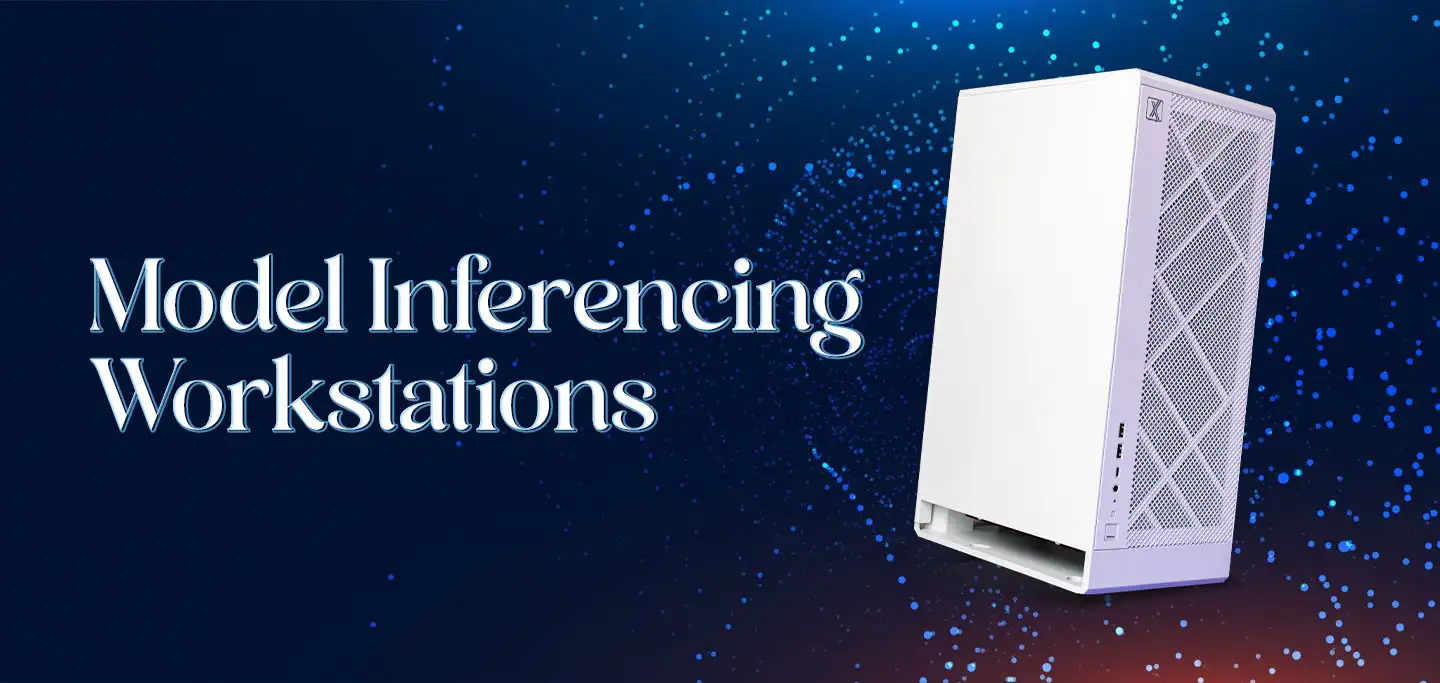
Discover model-inferencing workstations: advanced AI systems revolutionizing industries from retail to smart cities and mastering complex tasks with cutting-edge technology.
Explore how hybrid systems revolutionize transportation, energy, manufacturing, and daily life by integrating diverse technologies for innovative solutions.

Delve into Edge AI's impact on latency, privacy, and autonomy. Uncover its applications in healthcare, manufacturing, retail, and security.