Google just released Gemma 4, bringing a new family of open AI models directly to us.
Google just released Gemma 4, bringing a new family of open AI models directly to us. What makes this April 2026 release so exciting is how it lets you run heavy artificial intelligence workloads entirely on your own systems. These models scale perfectly from everyday smartphones right up to heavy-duty desktop workstations loaded with dedicated GPUs. Because Google released them under the open Apache 2.0 license, developers and content creators have the complete freedom to build, modify, and set up AI tools for any project they want. Let's explore exactly how these new models work and the specific hardware you need to run them natively on your machine.
Google designed Gemma 4 in four distinct sizes to serve everything from smartphones to high-performance enterprise servers.
Gemma E2B (Effective 2 Billion): Created specifically for mobile phones and IoT edge devices. This highly efficient model handles text, images, and audio locally with impressive speed.
Gemma E4B (Effective 4 Billion): A slightly larger option optimized for environments like tablets and modern laptops. It brings robust text, vision, and audio processing to your daily workflow.
Gemma 26B MoE (Mixture of Experts): A highly capable mid-range model. It uses an innovative architecture that activates only 4 billion parameters during operation, giving you the high-quality output of a large model while keeping the processing fast and energy efficient. It excels at complex text, coding, and vision tasks.
Gemma 31B Dense: The flagship model of the family. It delivers exceptional raw performance for complex reasoning, intricate problem-solving, and deep visual analysis on enterprise-grade hardware.
Gemma 4 introduces structural innovations that elevate how we interact with open-source AI, especially for those managing complex media pipelines.
Previous iterations focused primarily on text. Gemma 4 natively processes multiple forms of data from the ground up. All four models understand text and images natively. The E2B and E4B models go a step further by processing raw audio. This allows you to pass voice recordings or video audio tracks directly to the model for instant transcription and analysis an incredible asset for streamlining video production and content management workflows. Furthermore, the vision system preserves the original aspect ratio of your images, maintaining their natural dimensions for highly accurate visual analysis.
These models remember a vast amount of information in a single conversation. The E2B and E4B models support a 128K context window, while the 26B and 31B models support a massive 256K context window. You can easily feed entire books, comprehensive marketing strategies, or lengthy podcast transcripts into your prompts for deep, continuous analysis.
Gemma 4 excels at acting as an autonomous agent. It features strong native function-calling and structured output capabilities. You can ask it to build an application or outline a content calendar, and it will plan the steps, generate the required code or text, and interact with external tools to complete the task effectively.
The models offer fluency in over 140 languages. This broad language support makes it highly effective for global enterprise applications, multilingual education tools, and localized content strategies.
Running these models locally keeps your data completely private and lowers operational costs. However, understanding your hardware is crucial for achieving smooth performance.
There is a vital distinction between unified RAM (used by Apple MacBooks with unified memory) and dedicated VRAM (found on discrete GPUs in high-performance computing setups). To experience fast, real-time text generation, the entire AI model must load directly into the GPU's VRAM. When a model exceeds the available VRAM, the computer offloads the remaining data to the standard system RAM, which causes generation speeds to drop significantly.
Here are the specific requirements to run Gemma 4 effectively:
Gemma E2B: Dedicated 4 GB VRAM (Runs smoothly on entry-level setup or smartphones)
Gemma E4B: Dedicated 8 GB VRAM (Ideal for entry level GPUs like RTX 5050, RTX 5060)
Gemma 26B MoE: Dedicated 16 to 24 GB VRAM (Ideal for Mid-range GPUs like an NVIDIA RTX 5070, RTX 5080, Pro 4000)
Gemma 31B Dense: Dedicated 24 to 32 GB VRAM (Requires High end GPUs like Pro 6000, Pro 5000, RTX 5090)
Gemma 4 represents a profound step forward for the open AI community. By providing these models under the Apache 2.0 license, Google invites you to build commercial applications, fine-tune the weights on your own data, and deploy customized solutions exactly how you envision them.
As you plan your next AI project, consider which model size fits your computational resources best. Start experimenting with the smaller E2B or E4B models on your laptop to see their capabilities firsthand and gradually scale up to massive GPU server clusters as your project demands.
You can reach out to us if you have any hardware problems related to AI.
📞 011-40727769
✉️ sales@proxpc.com
🌐 https://www.proxpc.com/
Resources you may find helpful.

AI is revolutionizing the hardware industry by boosting design, manufacturing, maintenance, supply chains, personalization, autonomy, security, and energy efficiency.
Discover model-inferencing workstations: advanced AI systems revolutionizing industries from retail to smart cities and mastering complex tasks with cutting-edge technology.
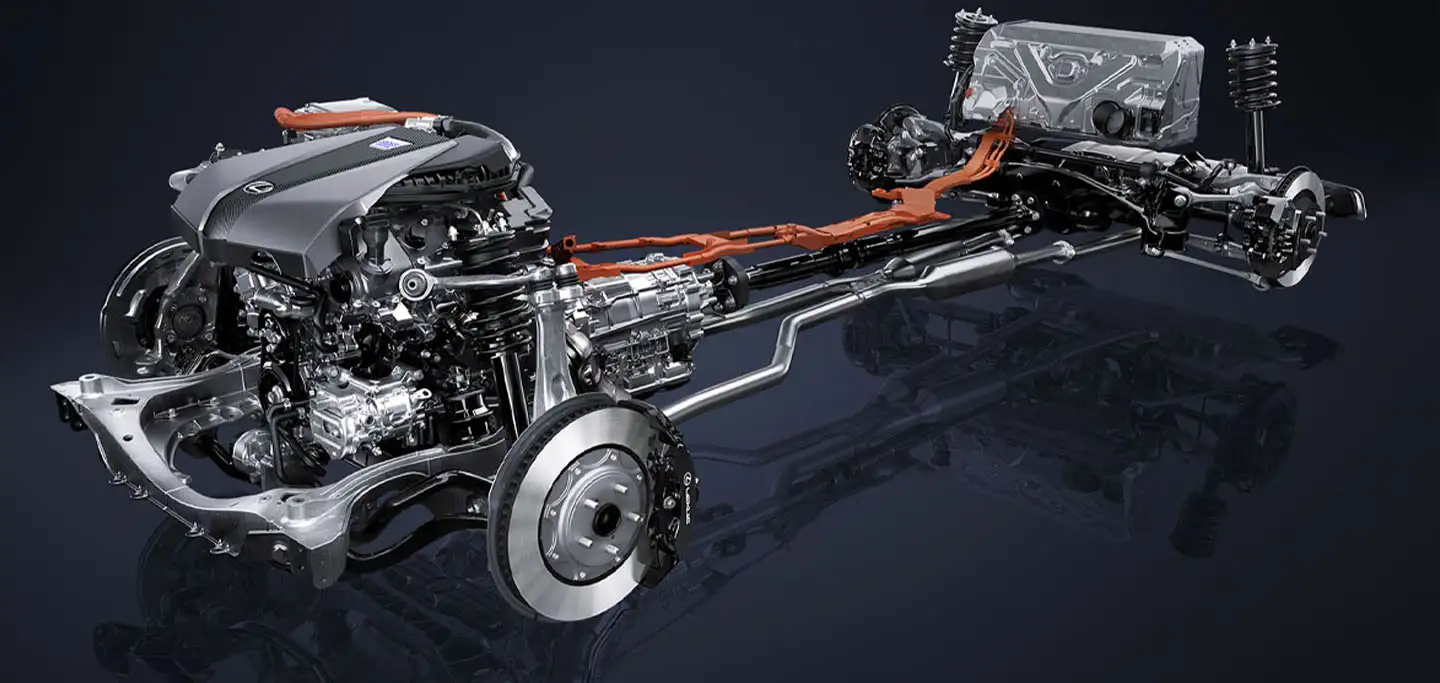
Explore how hybrid systems revolutionize transportation, energy, manufacturing, and daily life by integrating diverse technologies for innovative solutions.

Delve into Edge AI's impact on latency, privacy, and autonomy. Uncover its applications in healthcare, manufacturing, retail, and security.