Robots and autonomous machines are moving out of research labs and onto factory floors, warehouses, ports, and construction sites.
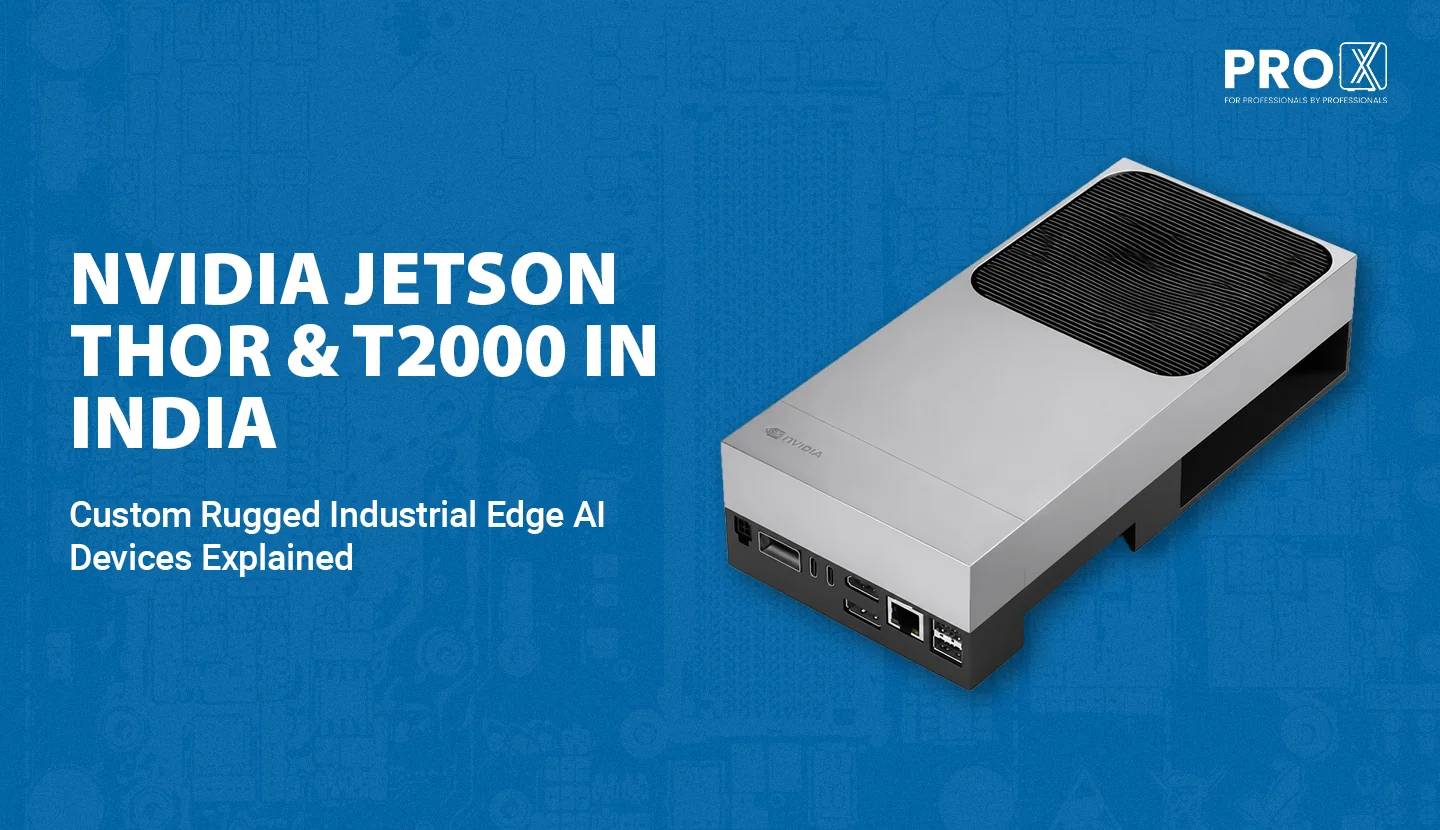
Robots and autonomous machines are moving out of research labs and onto factory floors, warehouses, ports, and construction sites. That shift only works if there's enough AI compute physically present at the site to see, reason, and act in real time, because sending every camera frame to a cloud server is too slow, too expensive, or simply impossible at locations with poor connectivity. NVIDIA's Thor family of edge modules, including the newly announced T2000, is built specifically to close that gap. This piece breaks down what these chips actually are, where they realistically fit in industrial deployments in India, and why the enclosure around the chip often matters as much as the chip itself.
Request a Quote
NVIDIA's Thor architecture is the successor to the Orin generation that has powered edge AI for the past few years. It's built on NVIDIA's Blackwell GPU architecture and is designed as a scalable family rather than a single chip, so developers can pick the right amount of compute for a given robot or machine instead of over- or under-provisioning.
At the top of the range sits Jetson AGX Thor, the flagship module aimed at humanoid robots and heavy multimodal perception. Published figures put it at roughly 2,000+ FP4 teraflops of AI compute with up to 128GB of unified LPDDR5X memory, running in a 40–130W power envelope. NVIDIA states this delivers about 7.5 times the AI performance and 3.5 times the energy efficiency of the previous AGX Orin generation, largely because the unified memory pool lets it run multi-billion-parameter foundation models directly on the device rather than a cut-down version.
Sitting below that, NVIDIA introduced two new modules in July 2026 to widen the platform: the T3000 and the T2000. The T3000 delivers around 865 FP4 teraflops in roughly half the size and power draw of the larger T5000 variant, pairs an eight-core Arm CPU with 32GB of memory, and is aimed at humanoid and industrial robots that need strong multimodal performance without the cost or power budget of the flagship chip. An IGX variant of the T3000 adds integrated functional safety, which matters for robots working directly alongside people.
The T2000 is the most relevant module for most industrial buyers, because it's the "wide deployment" tier of the Thor family rather than the halo product. It offers 400 FP4 teraflops of compute and 16GB of memory, positioned by NVIDIA as the entry point for visual AI agents, autonomous mobile robots (AMRs), and industrial manipulators. In practical terms, that's the tier suited to tasks like defect detection on a production line, pallet and forklift navigation in a warehouse, or a manipulator arm that needs to identify and pick parts, without needing the memory headroom of a humanoid robot running large foundation models.
Taken together, NVIDIA now offers a Jetson lineup spanning roughly 70 TOPS at the low end up to 2,000+ teraflops at the top, which means an industrial buyer can size compute to the actual workload instead of paying for capability they won't use. The T3000 and T2000 modules are currently at emulation/development stage on existing developer kits, with general availability scheduled for Q1 2027, so teams planning ahead can start development now and migrate hardware later without a software rewrite.
NVIDIA has named several companies building on the Jetson AGX Thor platform already, including Boston Dynamics, FANUC, Hitachi, and Amazon Robotics, spanning humanoid robotics, industrial automation, and warehouse logistics. In India, the more common near-term applications are less exotic but just as valuable: automated visual inspection on production lines, perimeter and safety monitoring at plants, pipeline and remote-site monitoring in oil & gas, traffic and transportation analytics, and quality control in construction and manufacturing environments where a round trip to a data centre isn't fast enough or reliable enough.
This is the piece that gets skipped in most coverage of new silicon, and it's the one that actually determines whether an edge AI deployment succeeds. Jetson AGX Thor, T3000, and T2000 are compute modules and developer kits. They're designed to be extremely capable at inference, but the reference carrier boards and developer kits are built for lab and workbench conditions, not for a rooftop in Rajasthan in June, a fertiliser plant with heavy dust, a coastal monitoring station, or a cold-storage facility running below freezing.
Real industrial sites bring problems no GPU benchmark accounts for: ambient temperatures well outside standard commercial ranges, airborne dust and particulates, humidity and direct water exposure during monsoon season, vibration from heavy machinery, and power that isn't always clean grid power. A standard desktop-class enclosure, or even a stock developer kit, typically isn't rated to survive that, and a single field failure can cost far more in downtime than the hardware itself.
Because Thor-class modules will ship in a handful of standard form factors, the realistic path for most industrial buyers isn't to wait for a perfect off-the-shelf enclosure, it's to have the compute module integrated into an enclosure built for the actual deployment environment. That's the gap ProX PC's Pro Sentinel platform is built to close.
Pro Sentinel is a compact, rugged compute platform that's already deployed across environments where standard hardware doesn't survive, engineered around whichever compute path a workload needs, including NVIDIA's GPU-based Jetson line for vision and inference work. If you're evaluating a Thor-class or T2000-based deployment for a harsh or remote site, we can build the specific device around your requirements rather than asking you to adapt to a fixed spec, including:
IP-rated and sealed enclosures, including dust-and-waterproof, submersible builds for marine and monsoon-exposed sites
Wide operating temperature range, from -20°C up to 75°C, for deployments in extreme heat, direct sunlight, or unheated outdoor cabinets
Cold-rated builds for cold storage, high-altitude, or winter-exposed sites
Fanless, sealed designs with no moving parts, for dusty or vibration-heavy environments
Low-power, solar and battery-ready configurations for off-grid or remote sites with unreliable power
This isn't a theoretical offering. Pro Sentinel devices are already running in aviation, marine, defence, oil & gas, transportation, and construction deployments, including a nationwide safety-monitoring rollout for HPCL using rugged micro-edge devices. That deployment and support model, backed by a nationwide technician network and on-site support, is what determines whether a project like this survives past the pilot stage.
Before specifying hardware, it's worth answering four questions: how much AI compute and memory the workload actually needs (T2000-class entry-level inference versus AGX Thor-class multimodal reasoning); what the physical environment demands in terms of temperature, dust, and moisture exposure; what power source is available on-site, including whether solar or battery operation is required; and what happens when something fails in the field, meaning what support and replacement process is in place. Getting the compute tier right matters, but getting the environmental rating and support model right is usually what decides whether the deployment still works twelve months later.
Request a Quote
Jetson Thor is NVIDIA's current generation of edge AI compute modules, built on the Blackwell GPU architecture, designed to run advanced AI models like vision-language models and robot foundation models directly on a device rather than in the cloud.
Yes, the Jetson AGX Thor Developer Kit is available through Indian distributors today for development and evaluation. The newer T3000 and T2000 modules are in emulation/development stage, with general availability scheduled for Q1 2027.
AGX Thor is the flagship module aimed at the most demanding multimodal and humanoid robotics workloads, with substantially more compute and memory. The T2000 is a lower-cost, lower-power entry point in the same architecture family, aimed at simpler visual AI, AMR, and industrial manipulator workloads.
The compute modules themselves are not rated for harsh environments out of the box. They need to be integrated into a purpose-built enclosure with appropriate ingress protection, thermal management, and power design, which is a separate engineering step from the chip itself.
Yes. ProX PC builds Pro Sentinel devices around Thor-class and T2000-class compute, customized for IP rating, dust/waterproof, extreme-heat, and cold-rated environments, with nationwide deployment and support across India.
Resources you may find helpful.
AI is revolutionizing the hardware industry by boosting design, manufacturing, maintenance, supply chains, personalization, autonomy, security, and energy efficiency.
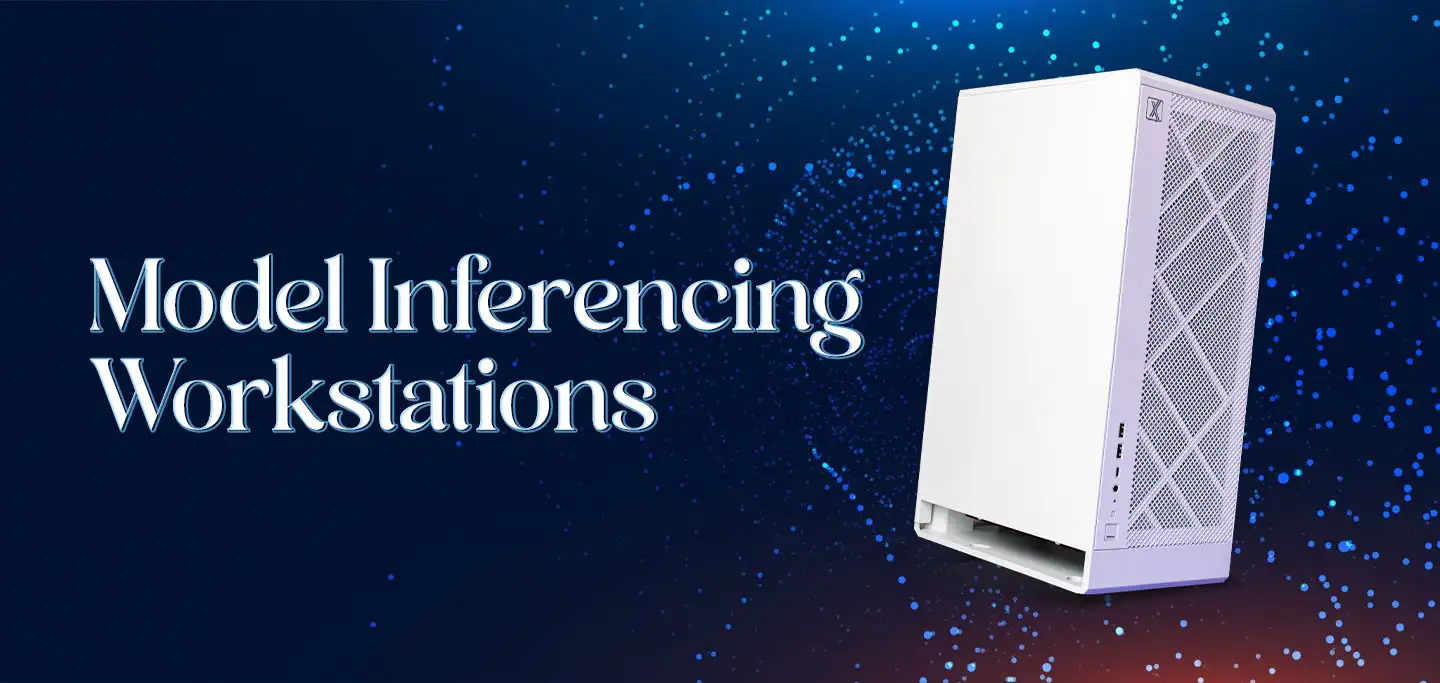
Discover model-inferencing workstations: advanced AI systems revolutionizing industries from retail to smart cities and mastering complex tasks with cutting-edge technology.
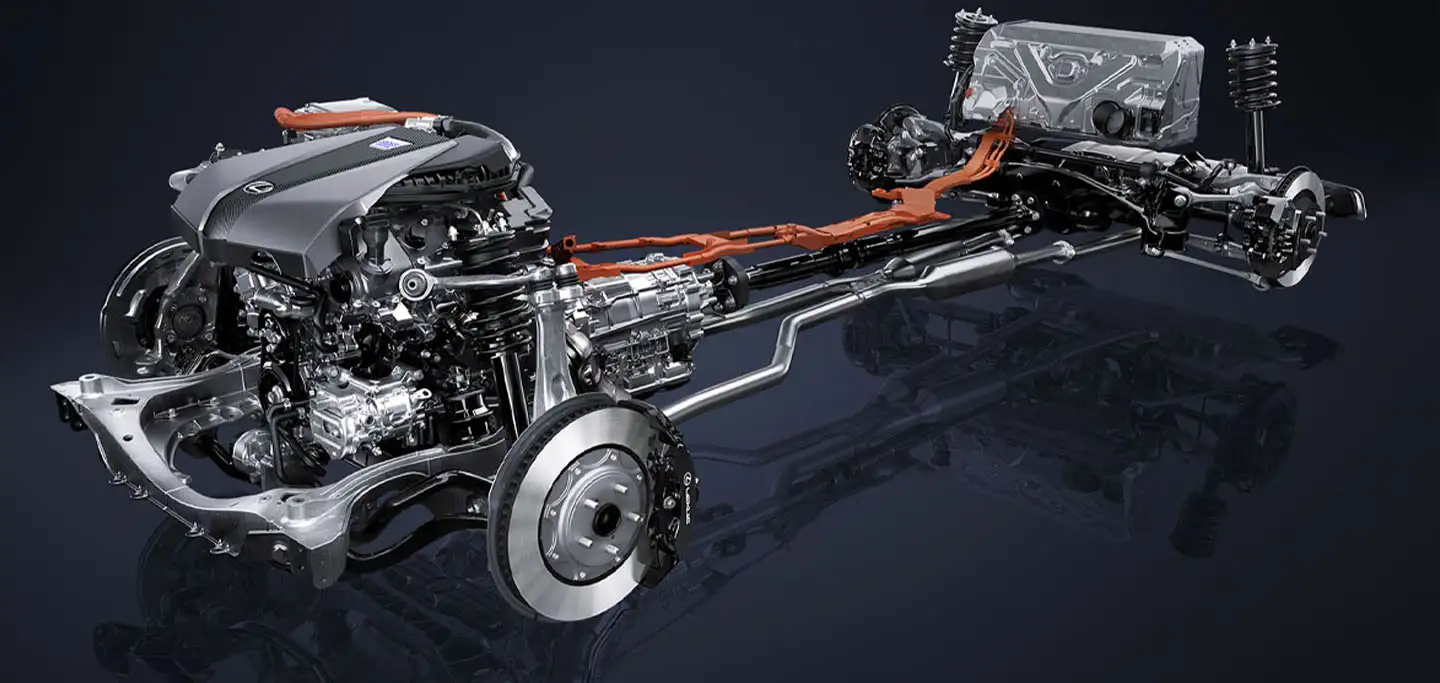
Explore how hybrid systems revolutionize transportation, energy, manufacturing, and daily life by integrating diverse technologies for innovative solutions.

Delve into Edge AI's impact on latency, privacy, and autonomy. Uncover its applications in healthcare, manufacturing, retail, and security.