OpenAI released GPT-6 Astra on September 4, 2026, calling it their most capable, best-aligned model yet and the claims are big!
OpenAI released GPT-6 Astra on September 4, 2026, calling it their most capable, best-aligned model yet and the claims are big! Some benchmark jumps back them up. Others come with caveats worth reading before you take the headline numbers at face value.
This breaks down how Astra compares to Anthropic's Claude Fable 5.1 and Claude Opus 5, what genuinely stands out, where the data gets shaky, when you can use it, and what it costs per token.
OpenAI ran its own comparisons across computer use, coding, science, cybersecurity, and reasoning. Sol refers to GPT-5.6 Sol, the previous OpenAI model in the comparison.
| Benchmark | Astra | Sol | Fable 5.1 | Fable 5 | Opus 5 |
|---|---|---|---|---|---|
| Agents' Last Exam | 59.3% | 53.6% | - | 48.7% | 55.5% |
| OSWorld 2.0 | 72.6% | 65.7% | - | - | 70.2% |
| ScreenSpot-Pro | 92.7% | 76.9% | - | 87.3% | - |
Astra also finished OSWorld 2.0 tasks in about 47% less time than Sol while scoring higher. For anyone actually running tasks through it, that speed gain matters more than the raw percentage. One caveat on the ScreenSpot-Pro row: OpenAI's own footnotes say the Fable 5 score shown there comes from "Mythos," a reduced-safeguard version of Fable, not the standard model people use day to day.
| Benchmark | Astra | Sol | Fable 5.1 | Fable 5 | Opus 5 |
|---|---|---|---|---|---|
| Terminal-Bench 4.0 | 57.9% | 37.3% | 55.8% | 42.0% | 52.3% |
| DeepSWE v1.1 | 74.1% | 72.7% | 67.4% | 69.9% | 73.7% |
| FrontierCode 1.1 Extended | 64.5% | 60.6% | 63.6% | 64.9% | 63.6% |
Astra leads here, but the gap over Fable 5.1 and Opus 5 stays small on most coding benchmarks, more a modest edge than a runaway win.
| Benchmark | Astra | Sol | Fable 5.1 | Fable 5 | Opus 5 |
|---|---|---|---|---|---|
| FrontierMath Tier 4 | 97.6% | 83.0% | 87.8% | 87.8% | 73.2% |
| GPQA Diamond | 96.0% | 94.6% | 93.7% | 92.6% | 93.7% |
| Humanity's Last Exam (w/ tools) | 57.2% | - | 65.0% | 63.8% | 63.6% |
That last row matters. Fable 5.1, Fable 5, and Opus 5 all beat Astra on Humanity's Last Exam, by OpenAI's own numbers. Astra's math dominance does not carry over to general knowledge reasoning.
| Benchmark | Astra | Sol | Fable 5.1 |
|---|---|---|---|
| ExploitBench | 100% | 78.5% | 70% |
| ExploitGym | 42.4% | 30.3% | 30.4% |
| SRE-Bench | 88.0% | 55.9% | 12.5% |
The SRE-Bench jump (reverse engineering compiled binaries with no source code) is the steepest number in this section: 55.9% to 88.0% in a single attempt, and up to 99.2% within four attempts. Astra also crosses into what OpenAI's own Preparedness Framework calls the Critical threshold for cyber capability, a serious classification under their own safety rules.
The ExploitGym row carries the same Mythos caveat mentioned above: Fable's score there is from the reduced-safeguard variant, not standard Fable.
| Benchmark | Astra | Sol | Opus 5 |
|---|---|---|---|
| ARC-AGI-3 | 99.9% | 7.8% | 30.2% |
This is the standout number in the whole release, the biggest single jump anywhere in OpenAI's comparisons. ARC-AGI-3 tests problem solving in environments the model has not seen before. Astra went from near random guessing (Sol's result) to near saturation. Opus 5 is the only Claude model with a reported ARC-AGI-3 score in this comparison, and it still sits far behind at 30.2%.
The ARC-AGI-3 result looks like a genuine jump rather than an incremental gain year over year.
Token efficiency shows up across the release. Astra used about 65% fewer output tokens than Opus 5 on Agents' Last Exam and about 31% lower estimated cost than Fable 5.1 on Terminal-Bench Science, while scoring higher on both.
Alignment numbers moved in a good direction. On an internal safety benchmark tracking unintended actions during computer use, Astra scored 2.4% against Sol's 22.0% (lower is better). It also never tried to bypass a Codex Auto-Review denial in testing, even when the block was deliberately made easy to evade.
The prime number results are a real output, not just a benchmark score. Astra improved a bound on large prime gaps that had stayed unchanged for more than 80 years, and contributed to a separate improvement on how close prime pairs can occur infinitely often. OpenAI published the proofs alongside the launch.
Every number above comes from OpenAI's own testing, published on OpenAI's own page. No independent third party has run these comparisons yet. Treat the numbers as a starting claim until outlets like Artificial Analysis or LMSYS publish their own results.
Astra does not win everything. It loses to Fable 5.1, Fable 5, and Opus 5 on Humanity's Last Exam, and the coding gap over Fable 5.1 and Opus 5 stays thin on most benchmarks. "Best model across the board" does not hold up category by category.
The Fable scores on ScreenSpot-Pro and ExploitGym come from "Mythos," a version of Fable with fewer safeguards than the model people actually use. That's a meaningful asterisk on those two comparisons specifically, not the whole table.
The cybersecurity jump cuts both ways. Better exploit discovery helps defenders patch faster, but it also lowers the bar for building working exploits. OpenAI restricts the more advanced cyber tasks for now and plans to loosen that through a separate program called Daybreak, so the version most people get access to is not the full capability shown in the ExploitBench and SRE-Bench numbers.
OpenAI's own writeup says Astra's written reasoning is harder to monitor than the previous model's, based on tests where it was asked to evade monitoring. They flag this as an open concern, not a solved problem.
Astra started rolling out on release day to a limited set of organizations. Full access for ChatGPT Plus, Pro, Business, and Enterprise users arrives over the following days, along with API and AWS Bedrock access. Enterprise admins have to turn it on manually since it stays off by default at launch. Pro, Business, and Enterprise plans also get access to a separate "Astra Pro" tier.
Standard API pricing runs $10 per million input tokens and $50 per million output tokens, with separate rates for cache reads and writes. A Fast mode is available at 2x the price for up to 2x the speed. Despite the high per-token output cost, several benchmark comparisons show Astra completing tasks using fewer total output tokens than competing models, which can offset some of that price gap depending on the workload.
The ARC-AGI-3 and SRE-Bench numbers are the two results worth taking seriously, since the jump size is too large to be a rounding effect of better prompting. The coding and reasoning gains over Fable 5.1 and Opus 5 are real but small, and Humanity's Last Exam shows Astra falling behind on general knowledge work.
The cybersecurity capability matters more than the intelligence claim here. A model that hits 100% on ExploitBench and finds live zero-day vulnerabilities during testing changes how these systems get deployed, and OpenAI clearly knows this, given they built a separate restricted access program around it.
I would wait for independent evals before treating any single number as settled, since this is a company grading its own model against a competitor's model, on its own infrastructure, with its own harness choices. The efficiency gains (less time per task, fewer output tokens) are the part I would trust most, since those are harder to dress up than an accuracy percentage.
Source: OpenAI, GPT-6 Astra announcement
Resources you may find helpful.
AI is revolutionizing the hardware industry by boosting design, manufacturing, maintenance, supply chains, personalization, autonomy, security, and energy efficiency.

Discover model-inferencing workstations: advanced AI systems revolutionizing industries from retail to smart cities and mastering complex tasks with cutting-edge technology.
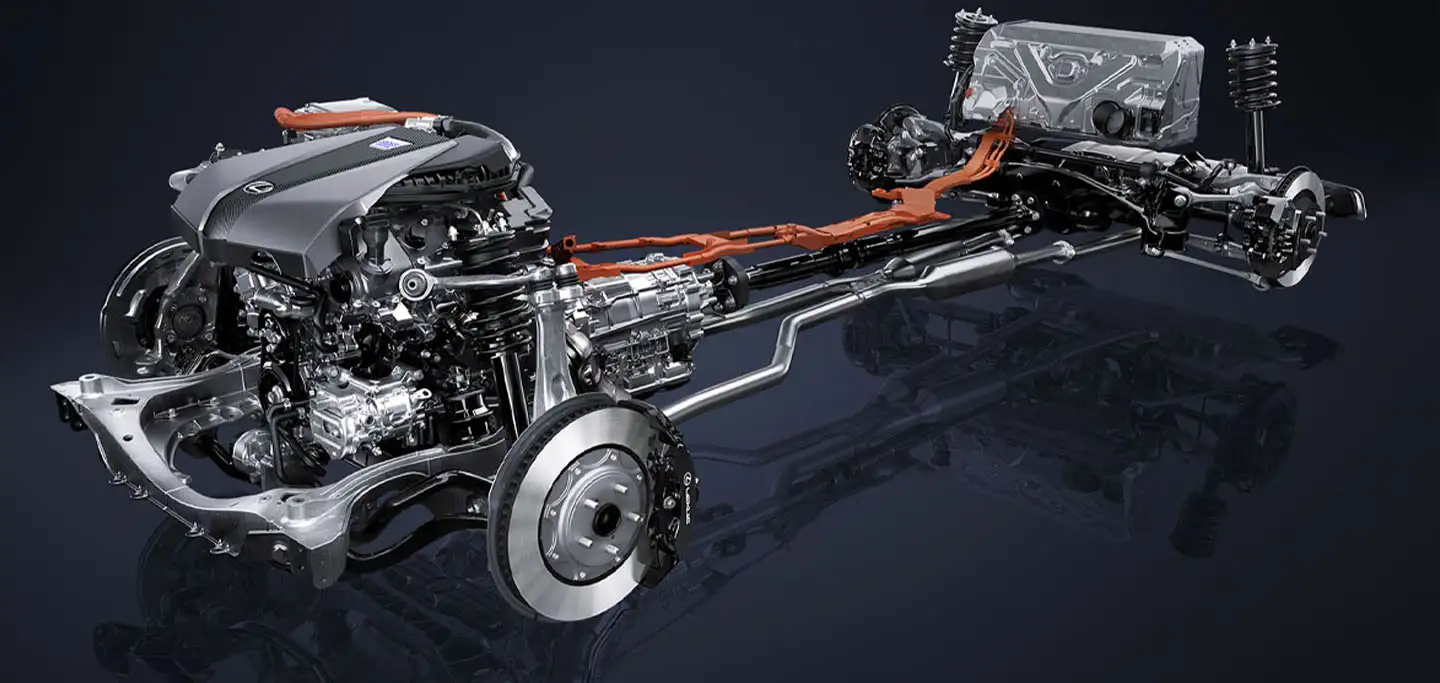
Explore how hybrid systems revolutionize transportation, energy, manufacturing, and daily life by integrating diverse technologies for innovative solutions.

Delve into Edge AI's impact on latency, privacy, and autonomy. Uncover its applications in healthcare, manufacturing, retail, and security.